Ukuleles are so popular in elementary music classrooms today. Why and how come? Well…
Ukuleles are an accessible and versatile addition to an elementary music classroom instrumentarium, whether you’re building a classroom ukulele program from scratch or expanding an existing collection of instruments.
Size and Ease of Play
Ukuleles are small, lightweight, and very portable, making them easy for young children to handle. They have fewer strings than guitars, making them easier for beginners to learn.
For elementary music teachers building a classroom ukulele collection, size and ease of use can be important considerations when choosing instruments for students.
Affordability
Ukuleles are generally more affordable than many other instruments, making them accessible for school programs with limited budgets.
Versatility
They can be used to teach a variety of musical concepts, including chords, strumming patterns, and melody. And you have a VAST array of repertoire you can play, from the oldies like “Don’t Worry, Be Happy,” to American folksongs like “On Top of Old Smokey.” But many curricula and materials out there can also allow you to cross-design other activities you might be doing in your classes, including adding Orff arrangements, movement, song games, and so much more.
This versatility makes the ukulele useful for both dedicated ukulele units and broader elementary general music instruction.
Quick Learning Curve
Sometimes, quick success is just what everyone needs to feel! Many students can learn to play simple ukulele songs relatively quickly, which can really boost their confidence and interest in music.
Community and Ensemble Playing
Ukuleles are great for group playing and can help foster a sense of community and teamwork among students.
.
.
.
Here are a few things to consider when adding ukulele to your curriculum:
What ukulele should I buy?
Choosing the best ukulele for an elementary music classroom depends on your budget, available storage, curriculum, and how you plan to use the instruments with students.
Ukuleles come in four different sizes:
The four common ukulele sizes each offer different options for classroom use.
The different sizes don’t necessarily match the player’s size, but are more for the type of application, like the basics of chord positions. Most elementary music classrooms choose a soprano ukulele for students because it is easier to store and more affordable. Speaking of money, if your budget allows, you might consider concert ukuleles as they can adapt to a student’s physical growth and skill set and often have a richer tone.
For many elementary classrooms, the choice often comes down to soprano vs. concert ukulele based on budget, storage space, sound, and how the instruments will be used.
How am I going to teach ukulele?
There are many ways to teach ukulele in an elementary music classroom, from a short introductory unit to incorporating ukulele throughout the school year.
Perhaps you are interested in just a unit on the ukulele, or it may be a major component in your yearlong planning. Still, ukulele curricula offer a wide range of approaches. From an Orff/Kodaly-infused approach that includes games, movement, classroom instruments like recorder and percussion, and singing to simple pop and folk tunes that can be accompanied, MIE carries the ukulele music and curricula you’re looking for and more.
Choosing a ukulele curriculum for elementary music can depend on whether you want to focus primarily on playing technique or connect ukulele instruction with singing, movement, percussion, recorder, Orff, Kodaly, and other classroom activities.
Classroom Management & Storage for Ukuleles:
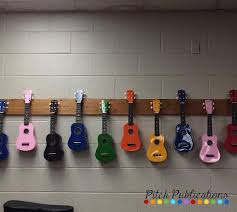
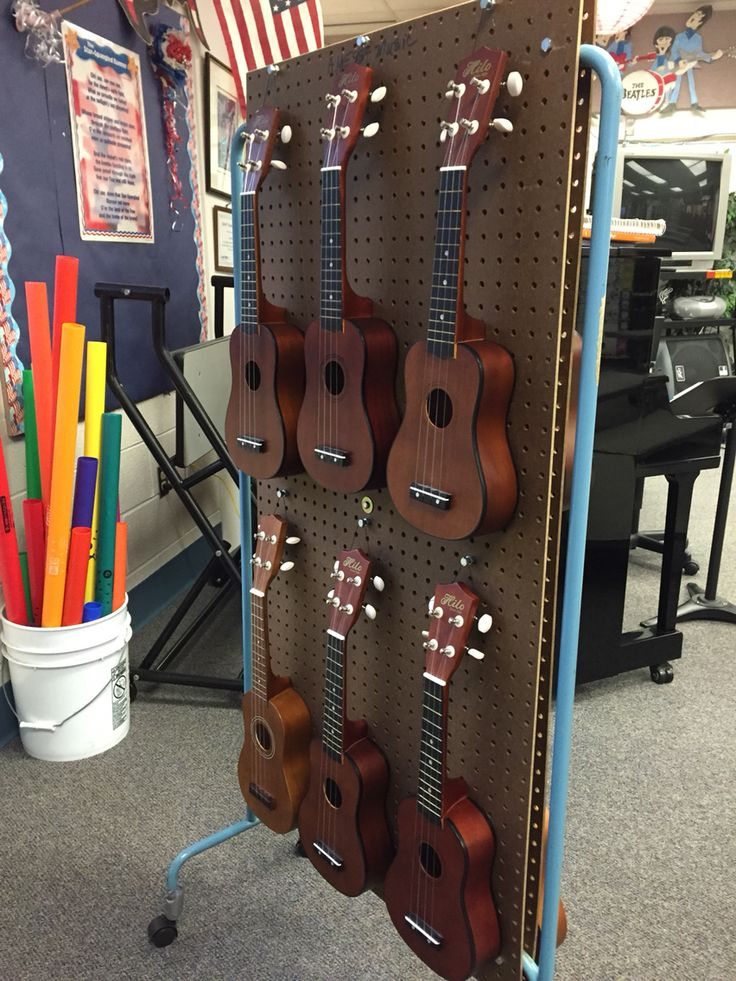
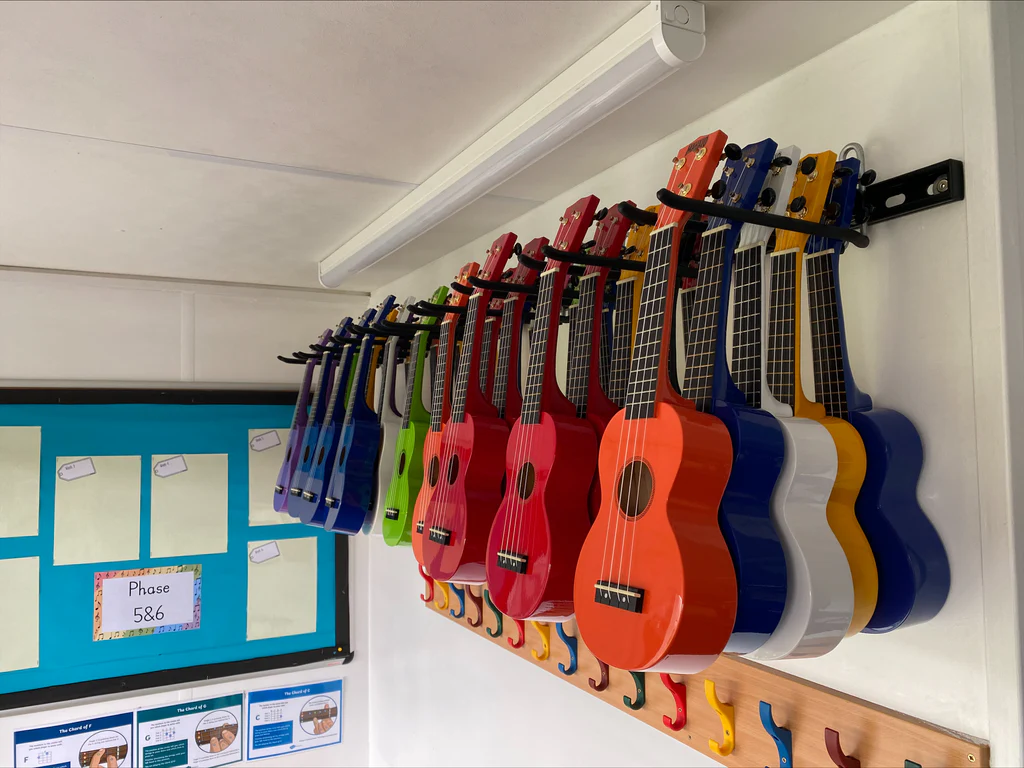
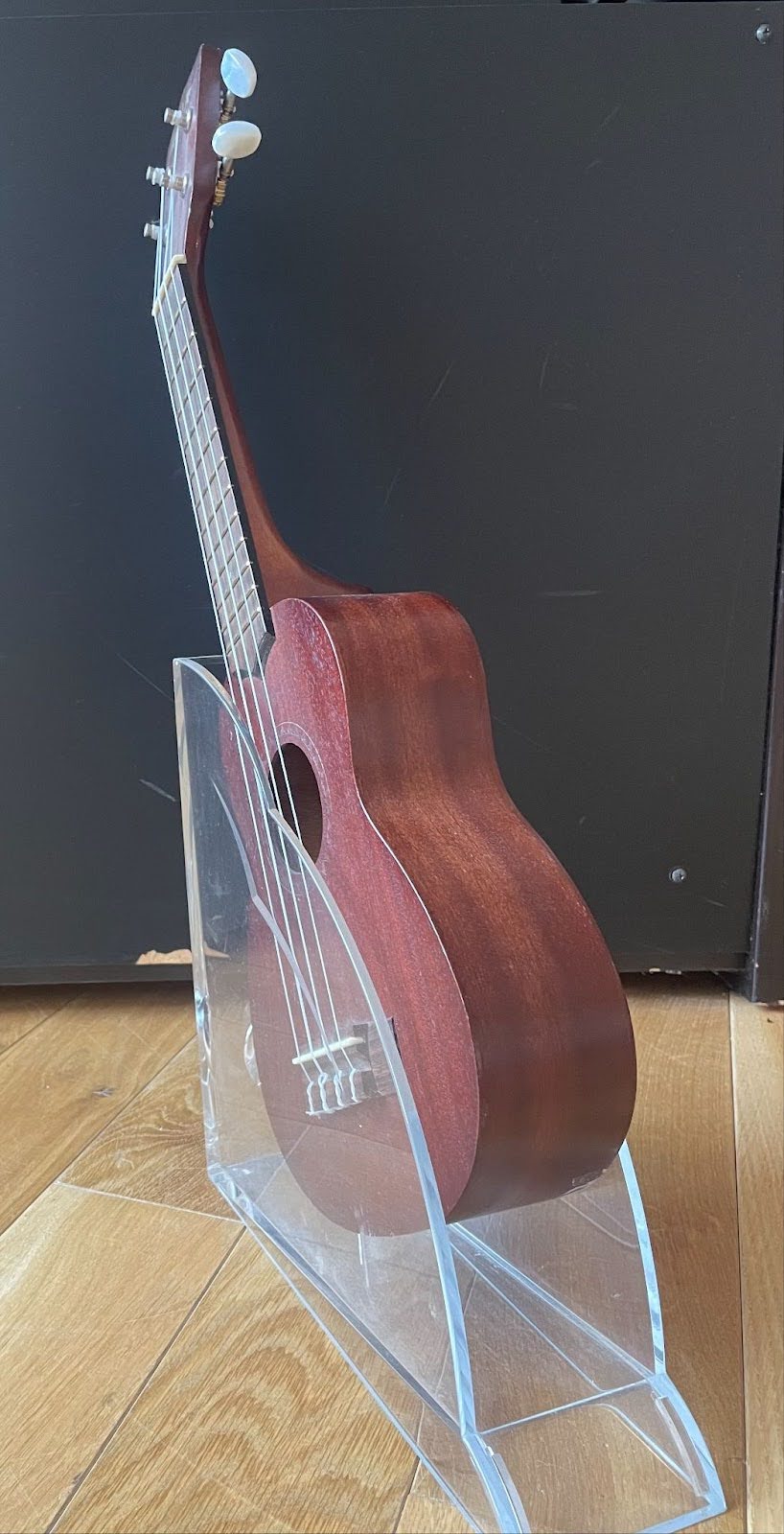
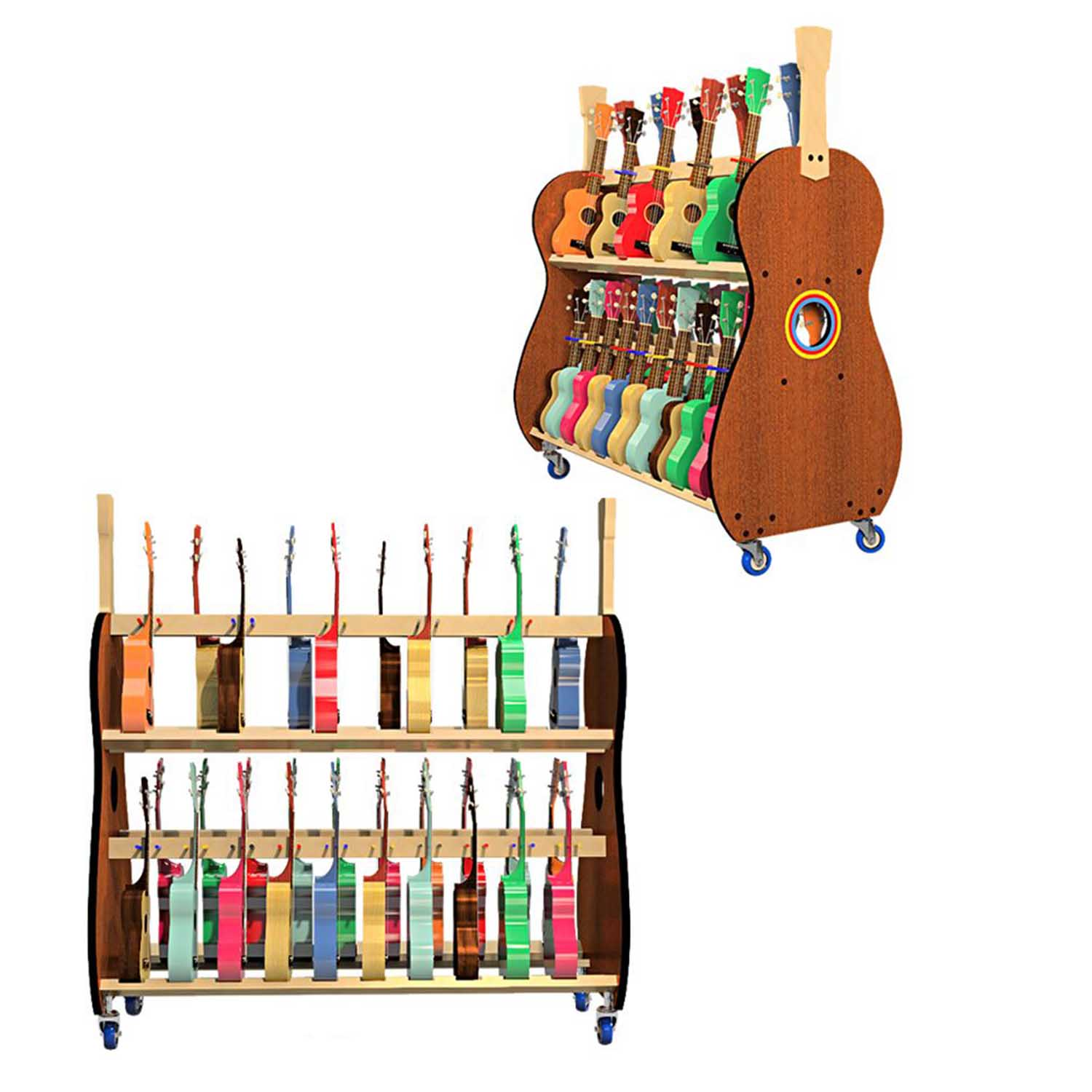
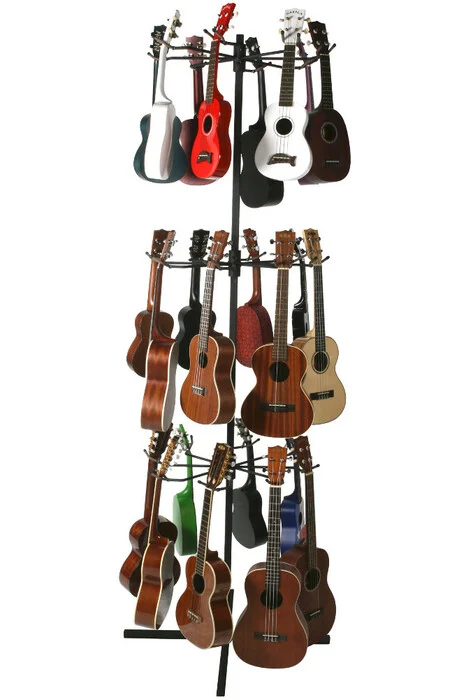
Ukulele storage is an important consideration when adding a classroom set, especially when space and instructional time are limited.
-
- Roll it
- Hang it
- Stand it up in a cardboard filing box
- Put it back in the case it came with
Having students responsibly involved in the care and storage of the ukulele is critical for time and space efficiency.
I inherited a classroom in which ukuleles were hung from the sides of shelving using a piece of yarn tied to the ukulele and a 3M plastic adhesive hook. It was durable and lasted the whole time I used the room!
Here’s an interesting blog addressing all the different ways you might consider storing your ukuleles! Link: oodlesofmusic.com/ukulele-storage-from-easy-to-expensive/
Additional storage solution: Mobile Uke Racks pictured below.