
I am a BIG fan of folk dancing! I’ve chosen to weave it throughout my K-5 curriculum. Simply put, folk dancing joyfully brings people together. It’s community building at its best! I’ve used it in the classroom to break the ice at the beginning of the school year and to celebrate its end. It’s been included in my concerts, arts festivals, and school-wide events across K- 12!
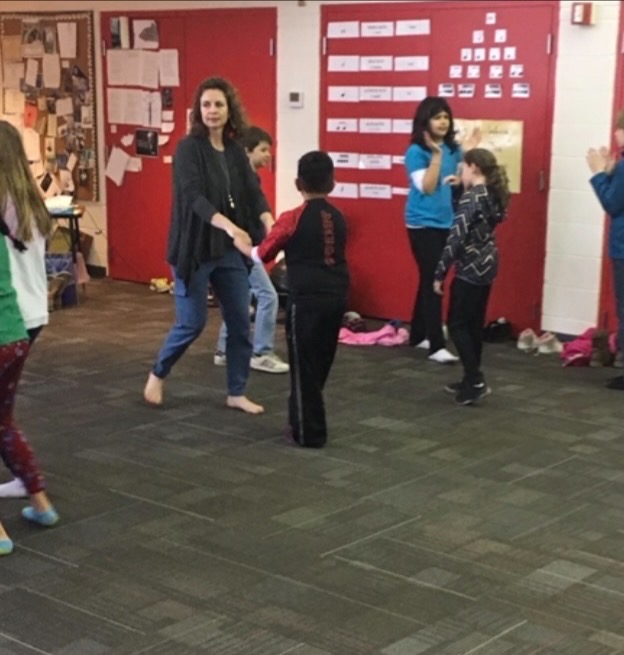
I begin the school year with folk dancing. It is a great way to start building relationships within the classroom among students and with me. I embed some of the classroom procedures and expectations we want to begin practicing through the way I manage the dances.
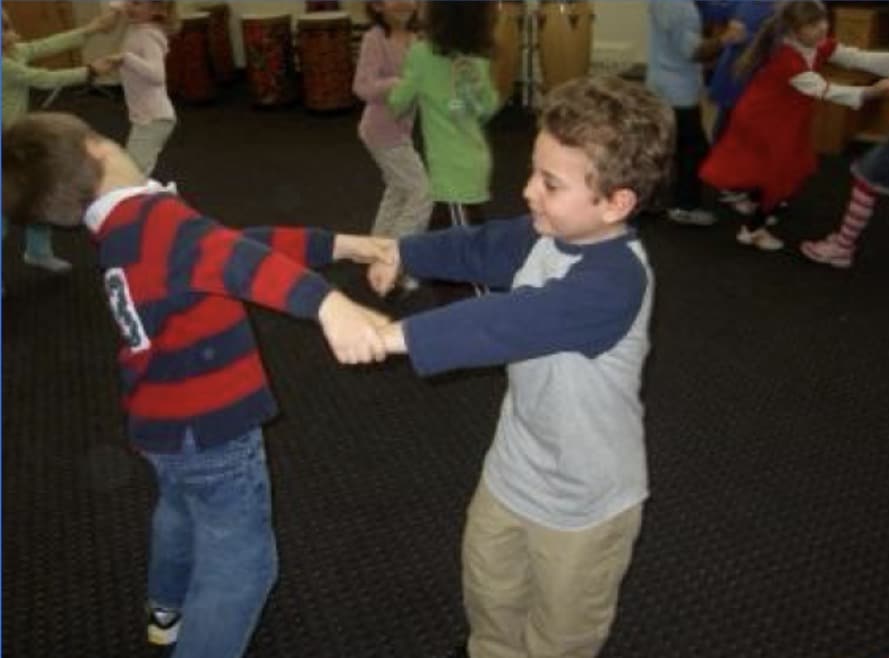
Through controlled chaos, the dance consistently brings a sense of joy and belonging to its participants. In a subtle way, folk dancing encourages risk-taking, exercises a sense of self-confidence, and adds to the student’s social, physical, and emotional well-being (Hello, SEL!).
And musically speaking? It sets in motion a student’s natural inclination to 8-beat phrases, repeated patterns, musical form, steady beat, and on and on!
But you already knew all of that!
Why Folk Dance?
- Community Building: Brings students together, creating a sense of joy and unity.
- SEL encourages risk-taking, builds self-confidence, and enhances social, physical, and belonging.
- Musical Skills: Reinforce understanding of 8-beat phrases, repeated patterns, musical form, and steady beat.
- Celebrate Diversity: Celebrate and embrace the diverse backgrounds of your students. It creates an inclusive environment where all students can feel seen and valued.
Implementation
- “Folk Dance Fridays”: A tradition to create excitement and anticipation among students.
- Start/End of the Year: Use folk dancing to establish relationships and introduce classroom procedures. And, to me, nothing says celebration like dancing! It’s a nice way to wind those final couple of weeks of the school year down.
- All Year Round: Incorporate folk dancing in concerts, arts festivals, and school-wide events.
Thoughts on Approach
- Listen and Talk Through: Begin by listening to the music and talking through the dance with small gestures while students are seated. My 2-finger person walking on the carpet, a raised elbow, crossed arms, you get it.
- Use Word Cues: Use the word cues often described in the dances OR create your own simple and memorable ones for specific steps (i.e. “split the banana” for casting off….I know, “peel the banana,” but it sticks, and students KNOW what it means.)
- Scatter Formation: For partner dances, start with students in a scatter formation. Provide guided instruction followed by independent practice of each step, BEFORE getting into formation.
- Isolate Parts: For example, when I’m teaching a dance in which students are casting off for the first time (“Alabama Gal” is the first dance in which they experience “split the banana”…!), every couple practices casting off. Then I’ll reinsert it into its proper place in the sequence. Same thing with the Troika. This 3-part dance (hence the name Troika!) I teach the second part, FIRST, because it’s the most challenging of the 3 distinct moves ( the right-side partner goes under the arms of the center person, then the left does the same).
There are so many different folk dances, PLEASE add yours in the comments and maybe mention what grade level you introduce it to! Here is a short list of where to begin.
Recommended Dances by Grade Level
- K/1/2: Jump Jim Joe, Seven Jumps, Shoe Maker
- 2/3: Alabama Gal, Irish Washerwoman, Rakes of Mallow, Quadrille (“Zipper Dance”), Fjaskern, Nigun Atik.
- 4/5: Peet’s Fire, Sashay The Donut, Troika
Resources
- At first, I taught myself many dances using the Rhythmically Moving CDs and the Phyllis Weikart Book, Teaching Movement & Dance: A Sequential Approach to Rhythmic Movement.
- Over time, through workshops and conferences, I devoured Peter and Mary Alice Amidon and the New England Dancing Masters books and many of the Shennigans CDs. Both are incredibly bountiful resources for folk dancing!
- There are a ton more out there, and Music is Elementary has all your resources for folk dancing right here! Enjoy!
Drop me a line and share your thoughts here! I’m always happy to hear what you’re doing and how you’re doing it in your classes!