
Studio 49 at Music Is Elementary
Shop Studio 49 by instrument
Xylophones, metallophones and glockenspiels each come in their own voices. Start with the family and size you need, or browse the full Studio 49 collection.
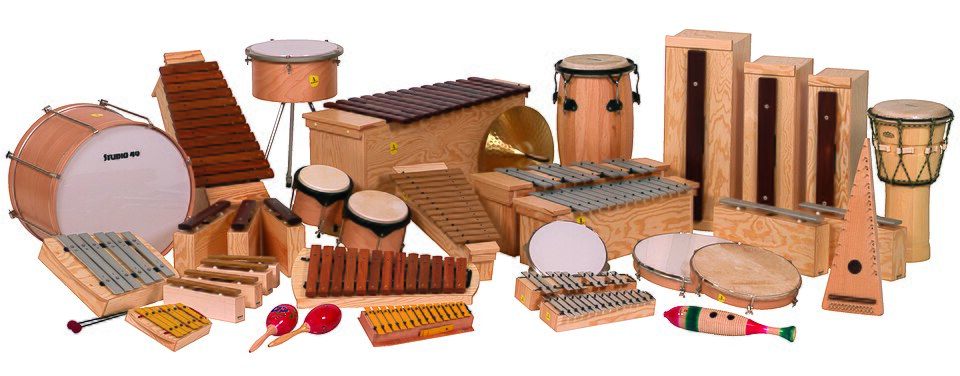
Xylophones
Rosewood, wood or Grillodur bars. Clear, crisp and articulate.


Metallophones
Aluminum bars. Warm, ringing and sustained.


Glockenspiels
Small steel bars. Bright and bell-like.


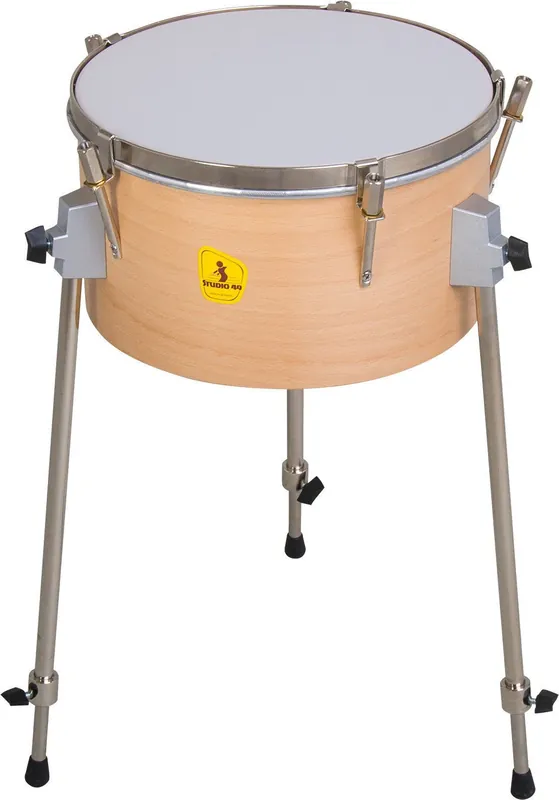
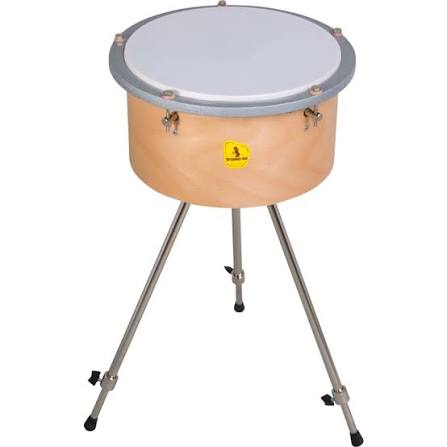
Timpani
German-made timpani with laminated hardwood bodies and adjustable legs.
Foundation & packages
Deep bass tones and complete classroom sets.

Contrabass Bars
Single resonator bars an octave below the bass xylophone, C through B.
Shop
Classroom Packages
Matched sets in every series, for starting or growing an instrumentarium.
Shop
Roger Sams, co-author of Purposeful Pathways
High quality Orff instruments are a great way to bring melodic concepts to life in your music classroom. They are valuable when accompanying singers, but even more so when students are composing and improvising.
Accessories & essentials
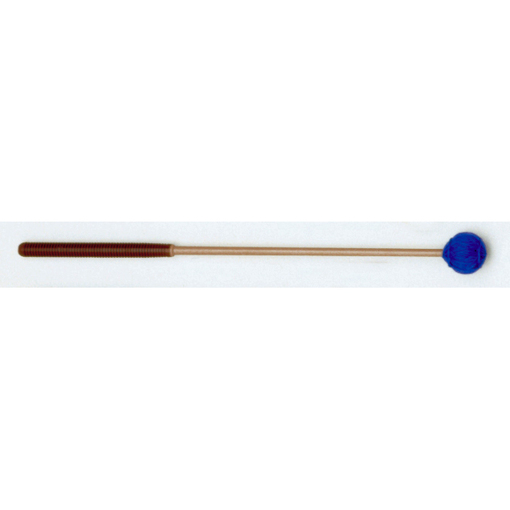
Mallets, stands, carry bags and the parts that keep instruments playing.


Shop by series
Studio 49 series for every music room
Each series has its own sound, size and price range. Series 2000, 1600 and 1000 also come in classroom packages.
Best for: programs investing in Studio 49's top line
- Jacaranda rosewood or Grillodur xylophones
- Profiled aluminum metallophones and nickel-plated steel glockenspiels
- Resonance chambers on alto and bass
Best for: a full ensemble on a tighter budget
- Rosewood xylophones and aluminum metallophones
- Chromatic add-ons for every xylophone and metallophone
- Steel alto glockenspiel
Best for: smaller rooms and teachers on the move
- Portable and stackable
- Wood or Grillodur xylophones, aluminum metallophones
- Carry bags available
Best for: early childhood and music therapy
- Alto range in C pentatonic
- Extra-wide bars; bars and mallets stay attached
- Light enough to play on the lap
Easy ordering for schools
- Purchase orders welcomeAccepted from schools and other institutions
- Tax-exempt school orderingUpload your tax-exempt certificate
- Quotes for your budgetSchool quotes are valid for 90 days
- Talk to a real person1-800-888-7502
Studio 49 sets a minimum advertised price (MAP) for its instruments, so you'll see the same price at every authorized dealer. Choose from our classroom packages and save 10% on the whole set, more than the big national music dealers take off their Studio 49 sets.


From the archive
Carmina Burana on stage, Munich 1959
Before Orff Schulwerk filled music rooms, Carl Orff was best known for Carmina Burana, a staged cantata built on songs and poems from a medieval manuscript kept at the Benediktbeuern monastery in Bavaria. It premiered in Frankfurt on 8 June 1937.
Helmut Jürgens (1902–1963), a stage designer for the Bavarian State Opera, created this design for a 1959 Munich staging: a starry dome hanging over dancers on a flowered meadow, the setting for the work's Uf dem Anger ("On the meadow") songs.
Why Studio 49
Why teachers choose Studio 49


The Orff connection
Where the story begins
Orff Schulwerk is the approach to music education that composer Carl Orff developed with Gunild Keetman, built on singing, speech, movement and playing together. Studio 49's owner traces the company's beginnings to Orff's own composing room, and the instruments have been made for the Schulwerk ever since. Founded in 1949 in Gräfelfing, near Munich, Studio 49 is still family-owned, and every bar is tuned by hand.
Every bar tuned by hand
- Each bar is hand-tuned by Studio 49
- Every instrument plays in tune with the rest
Solid wood resonance boxes
- Solid pine resonance boxes
- Series 2000 alto and bass add resonance chambers for more volume
Bars you can set for any lesson
- Lift bars off for pentatonic setups
- F♯ and B♭ bars included on diatonic models
- Chromatic add-ons available
Made for young players
- Flexible rubber pins hold bars in place
- Handles for carrying and setting on stands
Bar materials & mallets
Bar materials and the right mallets
The bar material shapes the sound, and the mallet finishes it. Here's what each Studio 49 bar is made of, the Studio 49 mallets matched to it, and a Kindermallets option.
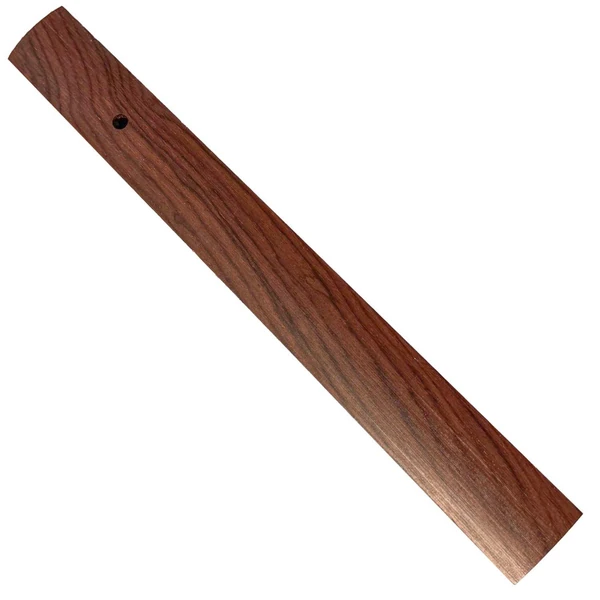
Rosewood
Xylophones · Series 2000, 1600, 1000
- Sound
- Warm, clear and short, so rhythms stay clean. Series 2000 uses Jacaranda rosewood.
- Best mallets
- Yarn or felt: soft for bass, medium for alto, harder for soprano. Rubber when you want more cut-through.
Studio 49 pairing: S 5 soprano · S 4 alto · S 3 bass
Kindermallets: Yarn mallets for soprano and alto, Bass Yarn for bass
Hear rosewood
Warm, clear and short. A Series 1600 soprano xylophone with rosewood bars.
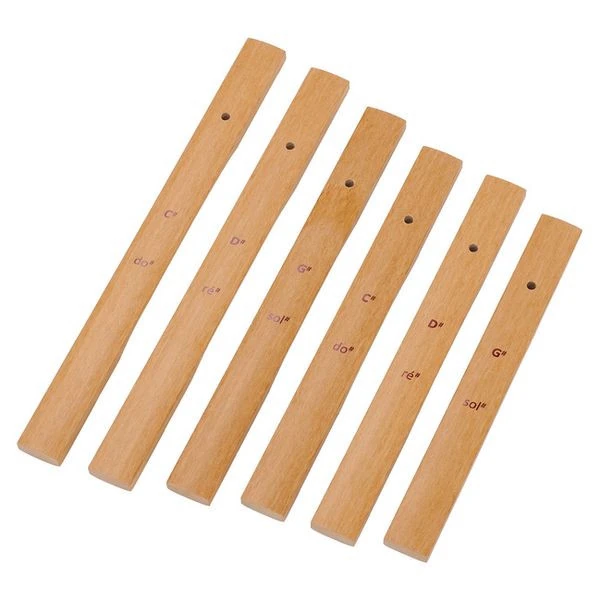
Grillodur
Xylophones · Series 2000, 1000
- Sound
- A refined fiberglass bar that holds its pitch through temperature and humidity changes, resists impact, and works outdoors.
- Best mallets
- The same yarn and felt choices as rosewood, matched to the voice.
Studio 49 pairing: S 50 soprano · S 40 alto · S 3 bass
Kindermallets: Yarn mallets for soprano and alto, Bass Yarn for bass
Hear Grillodur
A soprano xylophone with Grillodur bars, which hold their pitch indoors or out.
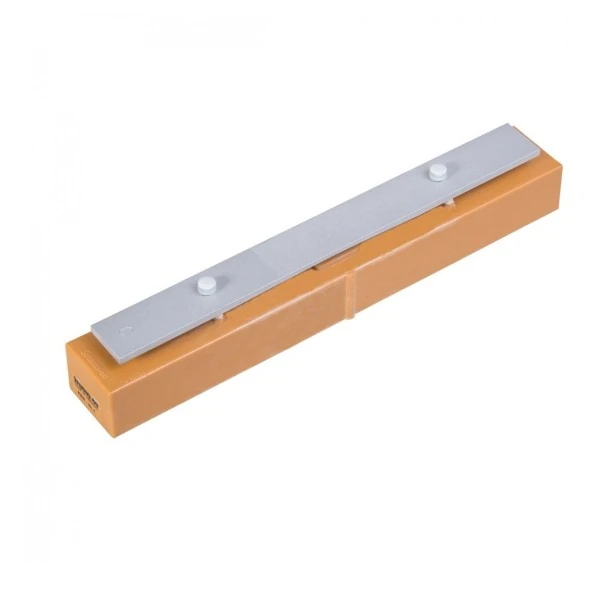
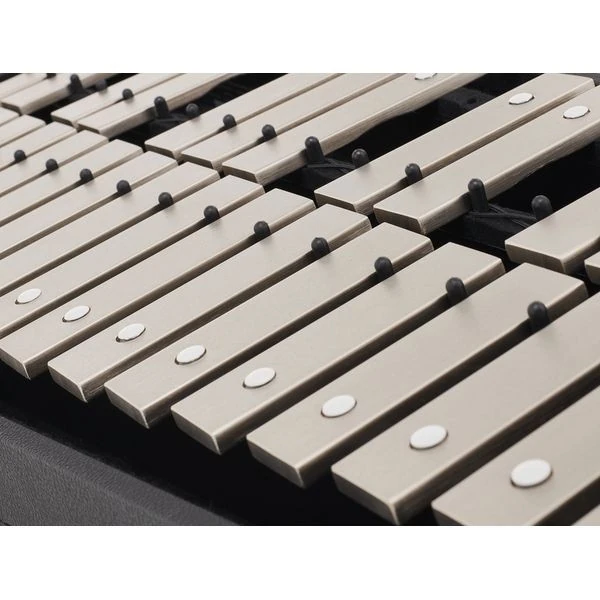
Aluminum
Metallophones · all series
- Sound
- Warm and ringing, with a long sustain. Series 2000 bars are profiled aluminum.
- Best mallets
- Medium felt or yarn for soprano and alto, soft yarn for bass.
Studio 49 pairing: S 50 soprano · S 7 alto · S 3 bass
Kindermallets: Cord mallets for soprano and alto, Bass Metallophone for bass
Hear aluminum
Warm and ringing, with a long sustain.
Steel
Glockenspiels · Series 2000, 1600
- Sound
- Bright and bell-like at the top of the texture. Series 2000 bars are nickel-plated steel.
- Best mallets
- Small, hard heads in wood, plastic or acrylic for a clear, accurate strike.
Studio 49 pairing: S 1 soprano · S 2 alto
Kindermallets: Glockenspiel mallets in soft, medium or hard
Hear steel
Bright and bell-like at the top of the texture.
Want to hear more? Listen to more Studio 49 instruments on Studio 49’s YouTube channel.
Rule of thumb: never use a mallet harder than the bar. Hard plastic or metal mallets can damage wood bars, so keep those for the glockenspiels.

Kindermallets
Color-coded mallets for every bar in the room
Kindermallets are built for classroom players: a durable fiberglass shaft, a rubberized grip, and heads color-coded by hardness, so it's easy to see which pair is which.
- Fiberglass shafts
- Rubberized grips
- Sold in pairs
- Packages of 6, 8 or 12
 Yellow = soft
Yarn (soft), recommended for alto xylophones.
 Blue = medium
Yarn (medium), for soprano and alto xylophones.
 Red = hard
Yarn (hard), recommended for soprano xylophones.

Metallophone Mallets, Cord
Cord-wrapped heads for soprano and alto metallophones.

Felt Ball Mallets
Felt ball heads for xylophones, metallophones or accessory percussion.

Bass Xylophone Mallets, Yarn
Larger yarn heads sized for bass xylophones.

Glockenspiel Mallets
Hard plastic heads for soprano glockenspiels; soft and medium too.
Outfitting a whole room? Kinder Mallet Packages A, B and C bundle 6, 8 or 12 mallets for glockenspiels, xylophones and metallophones.
Buying guide
Orff instrument buying guide
A practical guide for music teachers planning a first Orff set, adding to one, or making the case to an administrator.
Soprano, alto and bass
Barred instruments come in voices, like a choir. Bigger bars sound lower.
Soprano
Highest pitch, smallest bars
Melodies, bright ostinati and color
Alto
Middle range
Ostinati, melody and harmony
Bass
Lowest pitch, largest bars
Borduns and ground patterns that anchor the piece
Contrabass bars
An octave below the bass xylophone
Single-tone bars for deep foundation tones
Choosing for different grade levels
The same instruments grow with your students. What changes is how you set them up.
Younger students
- Take off the F and B bars for a pentatonic setup where every note sounds good together.
- Start with alto xylophones and one bass for a simple, full sound.
- Use stands so instruments sit at the right height.
Older students
- Add F♯ and B♭ bars to play in more keys and modes.
- Chromatic add-ons open up a wider range of repertoire.
- More voices (soprano, metallophone, glockenspiel) support independent parts.
Building an Orff instrumentarium
You don't have to buy it all at once. One way to plan it in stages:
- Start with the coreAlto xylophones plus at least one bass give you melody, ostinato and bordun.
- Add the top of the textureSoprano xylophones and glockenspiels widen the range and add color.
- Add sustainMetallophones bring a warm, ringing layer.
- Fill out the foundationContrabass bars and unpitched percussion complete the ensemble.
Planning classroom quantities
There's no single right number. These questions get you to yours.
- How big is your largest class?Plan for the class that stretches your room the most.
- How many students play at once?Whole-class playing needs more instruments than station rotations.
- Which voices do you need?Balance soprano, alto and bass so every part can be heard.
- What can you add later?A package now plus add-ons next year can fit a tight budget.
Want a second set of eyes on your plan? Send us your class sizes and budget, and we'll suggest a mix of instruments.
Studio 49 replacement parts
Studio 49 replacement parts
Keep your classroom instruments in excellent playing condition with Studio 49 replacement parts from Music Is Elementary. Whether you need replacement bars or other instrument components, we can help you find the parts needed to maintain your Orff instrumentarium.
- Single replacement bars
- Nails & pins
- Rubber tubing & tacks
- Rubber feet
- Damper bars (BM 2000)
- Carry bags
- Resonance boxes (special order)
- Handles (special order)
We stock common nails, pins, tubing and bags. Bars and special-order parts come from Studio 49 through MMB Music, its North American distributor.
How it works
- Send a requestTell us the instrument and the part, with a photo of the whole instrument and a close-up of the part.
- We confirm the partOur team matches it, checking with the manufacturer when needed.
- Approve your quoteWe send a quote, and your order is placed only after you approve it.
Resource Center
Resources for your Orff music classroom
Guides, lessons and arrangements for barred instruments, from our Resource Center and our friends at Teaching With Orff.

By Jennifer Shaw, Educator & Consultant at Music Is Elementary
Building Your Classroom Instrumentarium: Barred Instruments
Planning a balanced set of xylophones, metallophones and glockenspiels.
Read MIE Resource CenterBuilding Your Classroom Instrumentarium: Mallets for Barred Instruments
Which yarn, felt and rubber mallets to use on each instrument.
Read MIE Resource CenterMallet Technique
How students hold and strike with mallets, and why it changes the sound.
Read MIE Resource CenterEarly Elementary Barred Instrument Lesson: Exploring Sound with Frog and Toad
A first barred-instrument lesson for young players.
Read Teaching WithOrffTypes of Borduns in Elementary General Music
Victoria Boler defines borduns, walks through four types, and gives guidelines for writing your own.
Read Teaching WithOrffLesson: Jabari Jumps
A picture-book lesson exploring high and low on the xylophone and practicing mallet technique.
Read Teaching WithOrffDuetto for Glockenspiels
A glockenspiel piece from Cyndee Giebler.
Read Teaching WithOrffInstrument Repair Hospital: Flexible Pins
Replacing broken flexible pins on a Studio 49 alto xylophone, step by step.
Read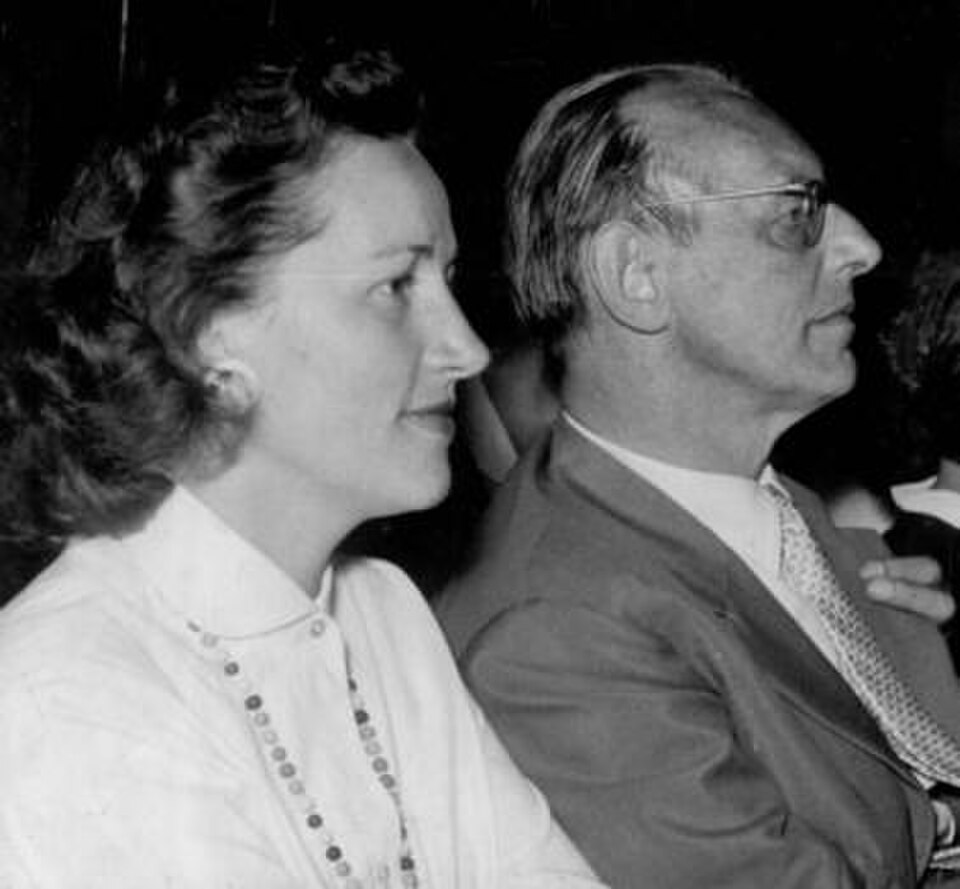

From the archive
Orff at the Fidula conference, 1956
Carl Orff was photographed with Lieselotte Holzmeister in August 1956 at the Fidula conference. Fidula is a German music publisher, founded in 1948 and still run by the Holzmeister family, that publishes children's songs, dances, school musicals and books on music education. Its name comes from the Latin word for the fiddle.
Every year since 1951, Fidula has brought music teachers together for a conference of hands-on workshops, where they sing, dance and play new material and take fresh ideas back to their classrooms. That Orff came to one shows how closely his Schulwerk was tied to the teachers putting it into practice.
Beyond barred instruments
Round out your Orff classroom
The instruments are the start. These are the books, recorders and percussion that fill out an Orff program.

Orff-Schulwerk Texts
The core Schulwerk volumes and teacher texts.
Shop now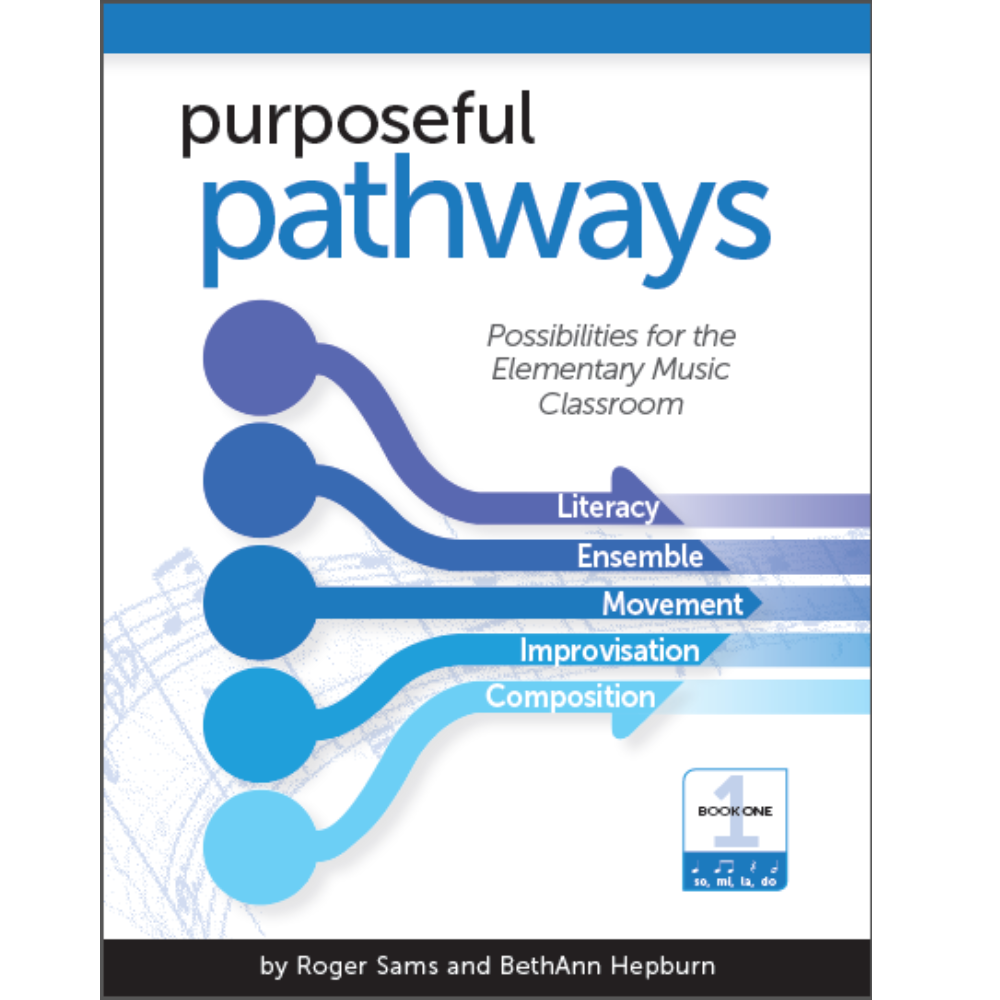
Purposeful Pathways
Orff-based lesson books co-written by Roger Sams.
Shop now
MIE205 Renaissance Recorders
Our own two-piece soprano recorder, in a range of classroom colors.
Shop now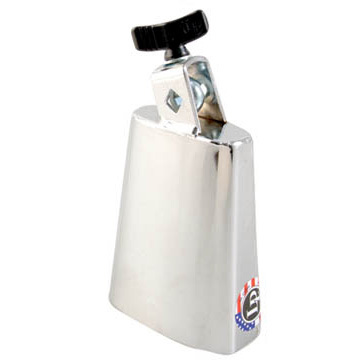
Unpitched Percussion
Drums, shakers and hand percussion for rhythm parts.
Shop now
Orff Stands
Stands that hold barred instruments at the right height.
Shop now
Movement & Dance
Books and resources for moving to music.
Shop nowQuick answers
Which Studio 49 series is right for my classroom?
Series 2000 is Studio 49's top line, with rosewood or Grillodur xylophones and resonance chambers on alto and bass. Series 1600 builds a full ensemble on a tighter budget. Series 1000 is compact, portable and stackable for smaller rooms. Series 500 (Easycussion) is made for early childhood and music therapy. Compare the series.
Rosewood, Grillodur, aluminum or steel: what's the difference?
Rosewood xylophone bars sound warm, clear and short. Grillodur is a fiberglass bar that holds its pitch through temperature and humidity changes and can go outdoors. Aluminum metallophone bars are warm and ringing with a long sustain. Steel glockenspiel bars are bright and bell-like. See bar materials.
Which mallets should I use with each instrument?
Use yarn or felt on xylophones and metallophones, softer for bass and harder for soprano, and small hard heads on glockenspiels. Never use a mallet harder than the bar. Studio 49 pairs S 5, S 4 and S 3 mallets with its rosewood xylophones, and Kindermallets color-code each head by hardness. Match mallets to bars.
Do I need soprano, alto and bass instruments?
Most classrooms start with alto xylophones plus at least one bass, which covers melody, ostinato and bordun. Add soprano xylophones and glockenspiels for the top of the texture, then metallophones for sustain. Read the buying guide.
Can I get replacement parts for Studio 49 instruments?
Yes. We stock common nails, pins, tubing and carry bags, and we can special-order single bars, resonance boxes and other parts from Studio 49 through MMB Music. Request a replacement part.
Do you accept school purchase orders?
Yes. We accept purchase orders from schools and other institutions, support tax-exempt ordering, and prepare quotes that are valid for 90 days. Contact our team.
Let's build it together
Your Studio 49 classroom starts here
Whether you're starting a new music program, expanding your instrument collection, or replacing classroom instruments, Music Is Elementary is here to help.